

Choose digital to capture life as it happens, quickly and sharply, and the pinhole camera if you want to slow down, make exposures of seconds or minutes and create the image from start to finish: neither one replaces the other.
The question comes up often, and is rarely asked neutrally: pinhole versus digital, as if you had to decide, as if one of them had to win. They are two ways of approaching the same thing, making an image, but with a relationship to time so different that it is hard to believe it is the same gesture.
If the process itself still intrigues you, the complete guide to pinhole photography lays the foundations.
What digital does wonderfully well
Let us say it straight away, because it would be dishonest to gloss over it: a digital camera is an extraordinary tool, and on its own ground it has no rival.
It is instantaneous, it freezes movement in a thousandth of a second, it delivers a sharpness the pinhole camera can never come close to, and it gives you a thousand images for nothing more than the cost of electricity. Exposure sets itself, you see the result on the screen straight away and you start again if it is not right. It is fast, reliable and plentiful, and for a large part of what we photograph every day, it is exactly what is needed.
For a child running, a dish before it gets cold, a memory caught without thinking, digital wins hands down and the pinhole camera would even be a poor choice. Acknowledging this takes nothing away from the pinhole camera; on the contrary, it helps explain why people are still drawn to it.
What the pinhole camera does that digital cannot
The pinhole camera takes the opposite approach on every count. It is slow where the other is immediate, soft where the other is sharp, one of a kind where the other is endless, manual where the other is automatic.
Without a lens, the hole does not converge the light but filters it through its smallness, which produces an image wrapped in a slight blur and an almost infinite depth of field, where the foreground and the horizon are rendered with the same approximation.
No digital lens really reproduces this look, because it does not come from a setting but from the absence of a lens, and everything that makes up the pinhole effect, from vignetting to the streaks of long exposures, stems from this same cause.
Exposure time changes everything
Where digital exposes in a thousandth of a second, the pinhole camera exposes for seconds, minutes, sometimes longer, and this slowness is the very heart of the process. The camera no longer records an instant, it records a duration: clouds stretch out, water turns to silk, a passer-by who does not stop ends up disappearing from the image. You are no longer photographing a scene, you are photographing the passage of time over that scene.
Finally, there is the gesture. With a pinhole camera, you steady the box, estimate the light, open, wait, then develop the image yourself in the baths and it appears before your eyes. Nothing is automatic, everything is in your hands, and the resulting image is one of a kind, made with your own hands from start to finish.

Two relationships with time rather than a winner
This is where the comparison stops being a duel. Digital gives you the result straight away and leaves you wanting more; the pinhole camera makes you wait and forces you to slow down, and these two logics do not measure the same thing.
One seeks efficiency, the perfect image with the least effort, and it excels at it. The other seeks waiting, an element of chance, the surprise of discovering what the light has left behind during those long seconds when you could see nothing.
Neither is superior. They answer different desires, and many photographers practise both without seeing the slightest contradiction.
Pinhole photography on a digital camera
In fact, the two worlds are not sealed off from each other, which is good news if you already own a camera body. You can remove the lens from a DSLR or a mirrorless camera and replace it with a cap drilled with a pinhole, and you then get the softness and infinite depth of field of the process on a digital sensor, with the comfort of an instant preview as a bonus.
To make one, you drill a hole of five to ten millimetres in the centre of a body cap, then glue a square of thin aluminium pierced with a needle on the inside, unless you buy a ready-drilled cap for your mount. On a sensor, the exposure ranges from a fraction of a second in full sun to several seconds indoors, and you can raise the ISO to shorten it.
Pinhole photography on a digital camera has its own method and its limits: it is a good way to get a taste of the look without touching chemistry, even though you lose the long analogue exposure and the act of developing.

Which to choose, depending on what you are looking for
If your need is to document life as it happens, quickly and reliably, stick with digital: it is the right tool and the pinhole camera would only bring you frustration. If you are an advanced film photographer looking for very large format and controlled sharpness, the pinhole camera is not your territory either.
But if you feel that photography has become too easy, too fast, too predictable, and you want to slow down, to make the image rather than capture it, to rediscover waiting and surprise, then the pinhole camera will give you exactly what digital has stopped giving you. The pinhole camera offers a different relationship with time and light.
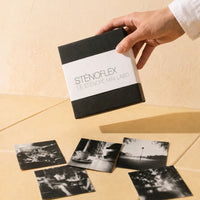
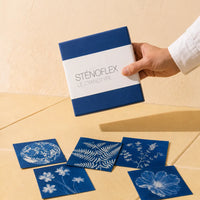
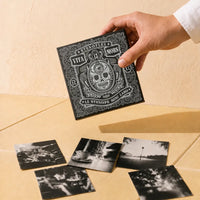
To take the plunge without stumbling over chemistry from the outset, the Sténoflex kit brings together in one box the pinhole camera, the paper, the developer, the fixer, the red safelight filter and the exposure guide card, everything you need to make your first images, from taking the picture to the print.
Designed in France in 2009 for beginners, it is the tool we use in workshops to get a first photo made in a single session. If you are comparing several pinhole camera kits before deciding, take the criteria one by one.
Two ways of seeing the world
Digital freezes the instant, sharp and endless; the pinhole camera records duration, soft and one of a kind; and neither replaces the other. One captures the world as it is, the other keeps the trace of the time passing over it.
A pinhole camera will not make you take better photos than your digital camera. It will make you take different photos, and that is often why people come back to it.
Éric Marais — Photographer, author of two books on pinhole photography (published by Pearson) and creator of the Sténoflex. Since the very beginning, he has run introductory workshops in pinhole photography and analogue developing.
